
For high-earning professionals in the Greater Toronto Area (GTA), retiring early comes with unique financial challenges. Rising living costs, heavy Ontario tax brackets, and complex drawdown rules often leave couples wondering: "Have we actually saved enough to stop working, or are we taking an unnecessary risk?"
When Jake and Donna (both age 58) reached out to our team at Ontario Wealth Strategy Experts, they were in a strong position on paper—but lacked a clear, stress-tested roadmap.
As a fee-only financial planner in Toronto, our objective was clear: provide unbiased, product-free advice to determine if they could safely retire five years early at age 60, help their children buy a home, and minimize their estate tax bill.
Financial Profile: $1.2M in Savings & Toronto Real Estate
Baseline Assumptions
Jake and Donna, both age 58, built a solid financial foundation through decades of hard work, accumulating $1.2 million in investable assets alongside significant equity in their Toronto home. They have 2 daughters Emma, age 26, married and Marsha, age 22, single.
| Asset / Income | Jake | Donna | Total / Combined |
|---|---|---|---|
| RRSP | $350,000 | $650,000 | $1,000,000 |
| TFSA | $110,000 | $90,000 | $200,000 |
| Toronto Principal Residence | — | — | $2,000,000 |
| Estimated CPP at Age 65 | $1,000 / mo | $1,200 / mo | $2,200 / mo |
| Estimated OAS at Age 65 | $700 / mo | $700 / mo | $1,400 / mo |
Key Planning Assumptions:
Target Spending: $6,000 / month ($72,000 / year) starting in retirement
Investment Returns: 5.0% baseline conservative growth rate
Base Inflation Rate: 2.2% annually.
Life Expectancy: Age 90
Need Help with
Taxes in Retirement ?
Core Questions for Toronto Retirees
Early Retirement, Taxes, & Family Wealth
Retirement Timing: Can we safely retire at age 60 instead of age 65?
Safe Withdrawal Rates: How much can we spend without running out of money?
Gifting Equity to Children: Can we give our adult daughters a substantial financial gift to help them enter the GTA real estate market next year?
Estate & Probate Minimization: How do we shield our $5.8M+ projected estate from Ontario Estate Administration Tax (probate) and legal risks?
Tax & Benefit Optimization: When should we start drawing down CPP, OAS, and RRIFs to minimize lifetime tax exposure?
Retiring at 60 vs. 65: Projections & Stress Testing
Assuming a linear 5% return, our modeling confirmed that Jake and Donna have more than enough capital to retire at age 60. However, real life rarely follows a straight line. To ensure their plan was bulletproof, we ran two critical stress-test scenarios.
They wanted to see what life would look like if they retired at 65 versus a few years early at 60.
Stress Test A: A 30% Market Crash at Age 60
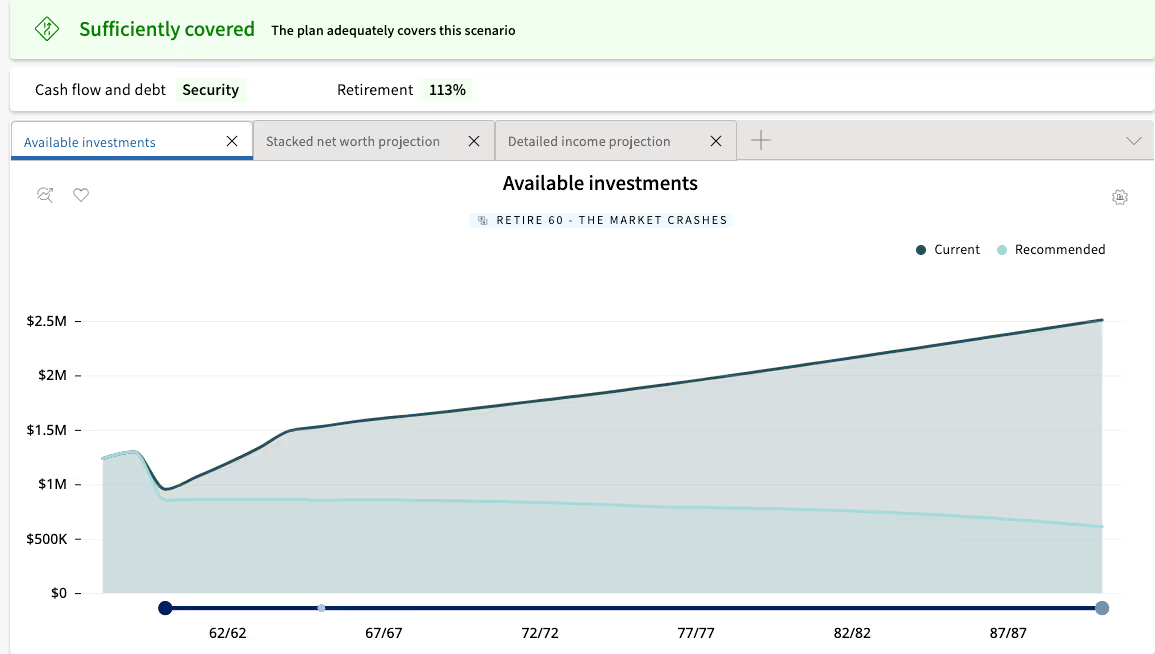
A major market downturn in the first few years of retirement creates severe Sequence of Returns Risk. We tested a scenario where the market drops 30% at age 60 and remains depressed for 4 years.
The Result: Even with a prolonged market crash right at retirement, their portfolio maintained a safe buffer through age 90.
Our Deployed Defense Strategies:
- The 3-Year Liquidity Buffer: Repositioned their portfolio to hold 3 years of net income requirements in liquid, low-volatility assets to avoid selling equities during a market dip.
- Strategic HELOC Usage: Accessing a Home Equity Line of Credit temporarily during down market years to fund living expenses without locking in capital losses.
The 3-Year Liquidity Buffer: Repositioned their portfolio to hold 3 years of net income requirements in liquid, low-volatility assets to avoid selling equities during a market dip.
Strategic HELOC Usage: Accessing a Home Equity Line of Credit temporarily during down market years to fund living expenses without locking in capital losses.
Stress Test B: Protecting Income Against 3.2% Sustained Inflation
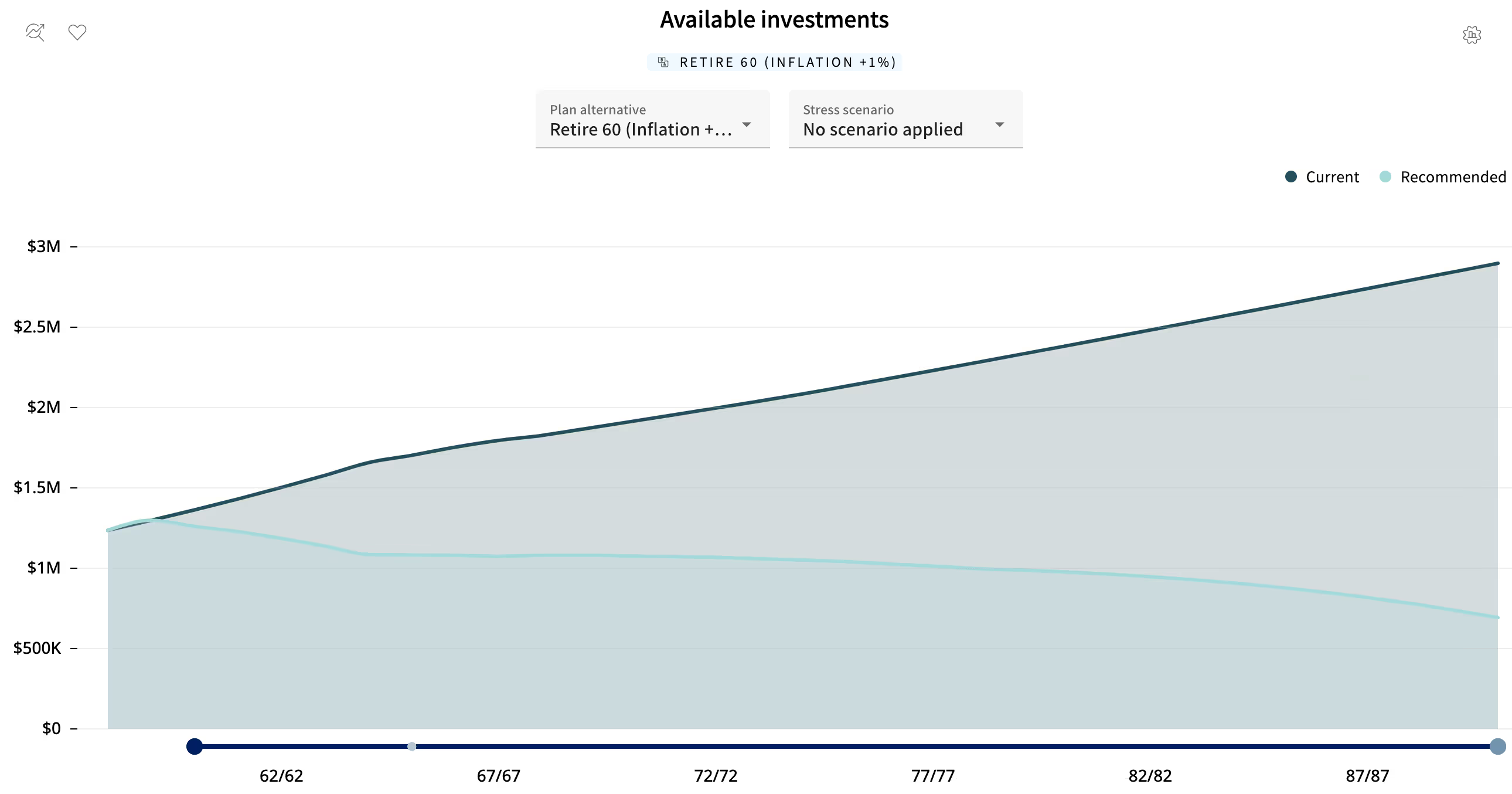
If inflation averages 3.2% over their 30-year retirement horizon (1.0% higher than the baseline):
The Result: Retiring at age 60 still leaves them with approximately $690,000 in liquid investments at age 90.
Secondary Levers Available: Downsizing their $2M Toronto home to a condo later in life, leveraging a HELOC, or utilizing a reverse mortgage if healthcare costs surge in their late 80s.
Need Help with
Taxes in Retirement ?
"Go-Go Years" Spending: Scaling Income from Age 60 to 70
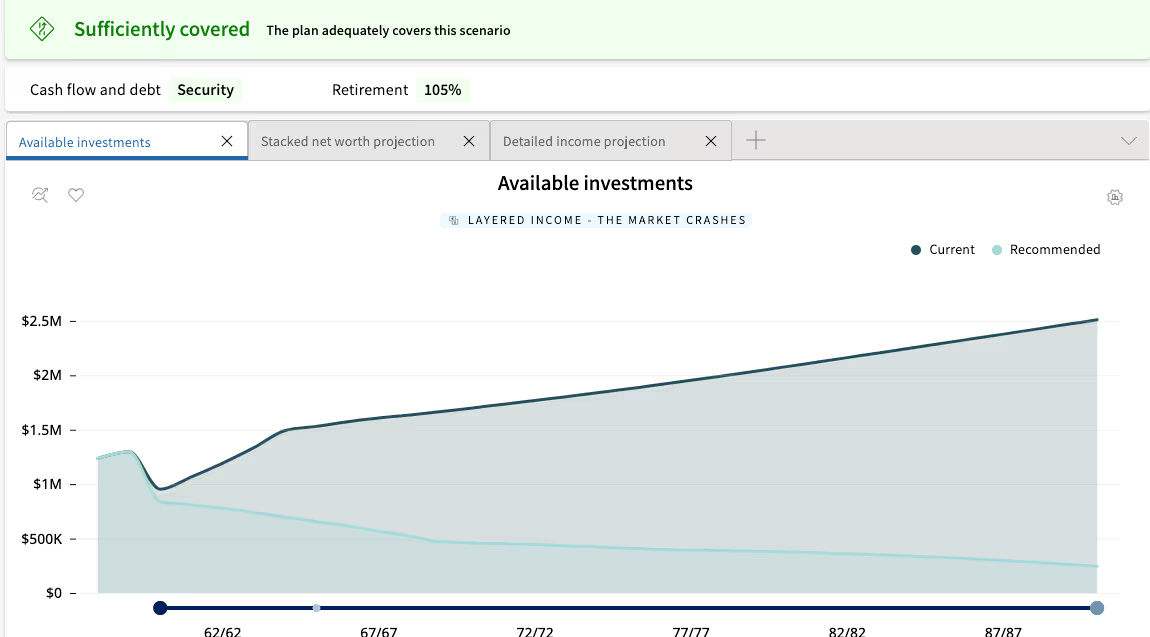
Many retirees spend significantly more during the early years of retirement ("the Go-Go years"). We modeled an aggressive spending schedule where Jake and Donna spend $8,000/month from age 60 to 70, dropping back down to $6,000/month at age 71 onwards.
With a Market Crash at Age 60: They still reach age 90 with $246,000 remaining in liquid assets.
With 3.2% Inflation: They finish at age 90 with $494,000 remaining.
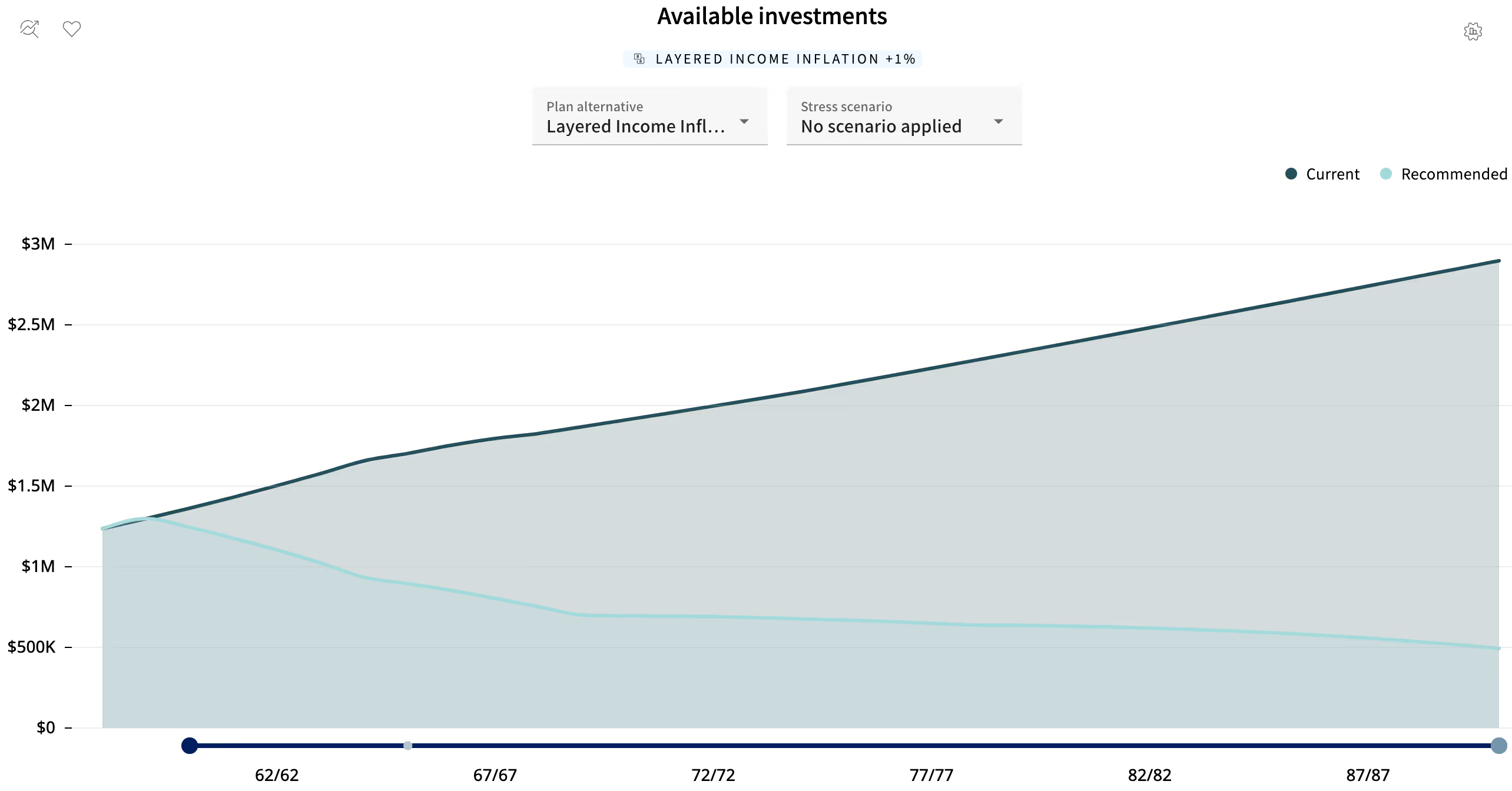
Verdict: They can comfortably spend $8,000/month during their first decade of retirement without risking financial insolvency.
Gifting Equity: Helping Adult Children Buy Toronto Real Estate
Helping adult children purchase real estate in Toronto is a top priority for many local families. However, timing is everything.
Retiring at Age 60: If they retire at 60 while spending $6,000/month, gifting a large lump sum ($150,000+) next year would severely compromise their financial safety cushion and remove their secondary inflation buffer.
The Solution: To make this gift without sacrificing their own security, Jake and Donna can either:
- 1. Postpone retirement to age 65 and gift their excess employment income directly to their child.
- 2.Plan a partial downsize of their primary residence at age 65–68 to unlock tax-free equity specifically earmarked for family gifts.
Jake and Donna were also unsure if they could achieve a significant family goal: helping their children enter the real estate market next year.
Advanced Ontario Estate & Probate Minimization Strategies
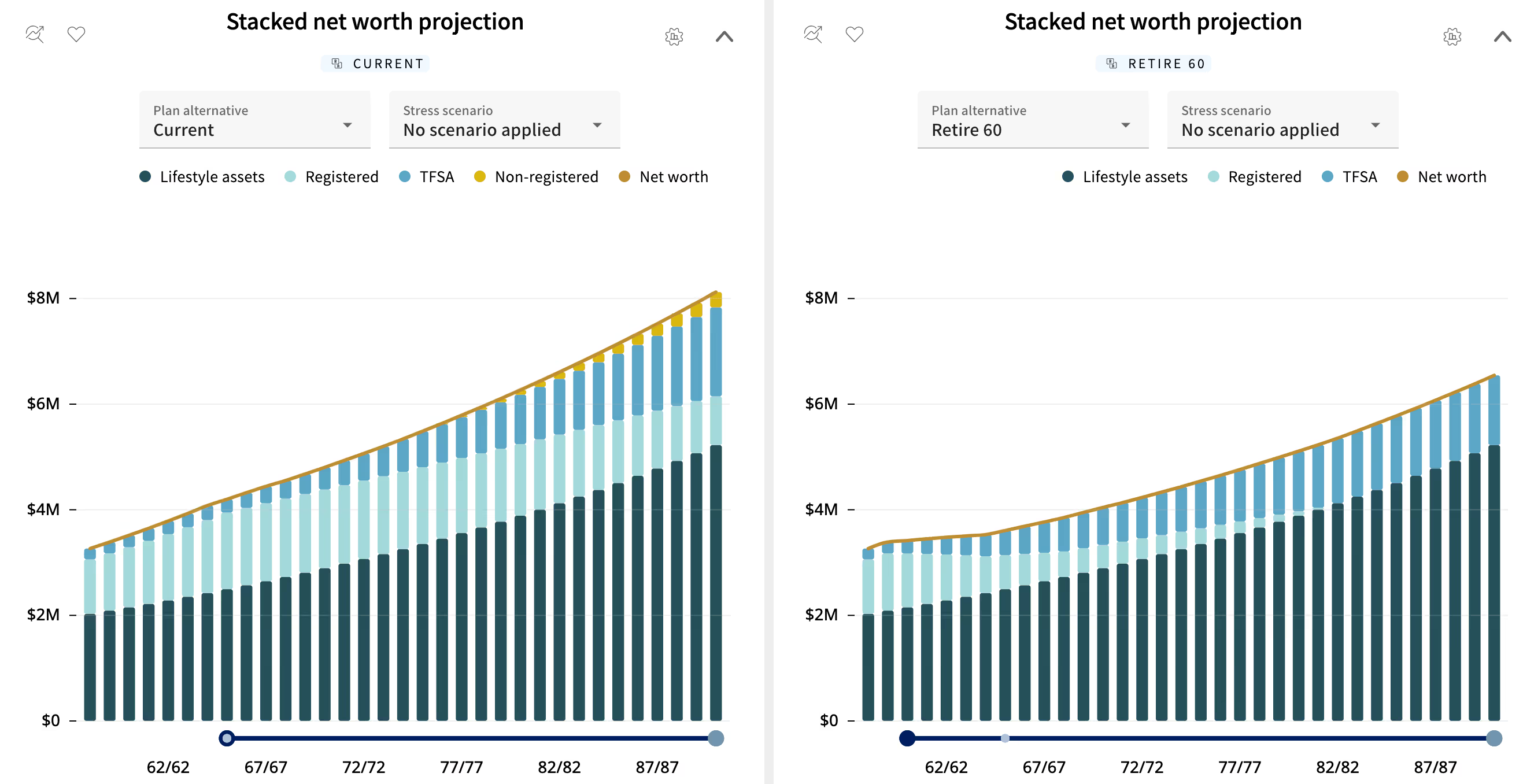
By age 90, Jake and Donna’s net worth is projected to reach approximately $5,830,000—primarily held in their Toronto residence ($5.22M) and TFSAs ($609,000). Without proper structure, this estate would face substantial Ontario taxes and legal exposure.
Estate Planning Strategy
| ASSET CLASS | STRATEGY & PROTECTION |
|---|---|
| Toronto Real Estate Property ($5,224,000 Projected) | First Dealings Exemption Bypasses Ontario Probate Tax |
| Tax-Free Savings Accounts ($609,000 Projected) | Direct Beneficiary Designation Passes Tax-Free Outside Estate |
| Creditor & Spousal Claims (Family Asset Protection) | Testamentary Trust Structure Protects Daughters' Inheritance |
Eliminating Ontario Estate Administration Tax (Probate)
Real Estate Protection: Coordinating with an estate lawyer, we verified that their Toronto home qualifies for the First Dealings Exemption under the Ontario Land Titles system. By executing a Secondary Will, this $5M+ property can pass to their daughters completely free of Ontario Probate Tax (saving over $75,000).
TFSA Beneficiaries: Naming their daughters as direct beneficiaries allows TFSA assets to bypass probate entirely.
Protecting Inheritance from Divorce & Creditor Claims
One of their daughters is facing potential marital instability. If assets are left to her outright, they could become subject to equalization claims in a divorce or legal action under the precedent set in Pecore v. Pecore.
The Fix: We structured their estate plan to establish Testamentary Discretionary Trusts for both daughters, adding a contingent charity or unborn grandchild as a beneficiary. This legal ring-fencing shields the family inheritance from future ex-spouses and external creditors.
Need Help with
Taxes in Retirement ?
Tax Optimization: CPP, OAS, and RRIF Withdrawal Timing
Deciding when to take Canadian government pensions is a critical step in tax minimization.
DECISION MATRIX: CPP & OAS TIMING
| JAKE (Age 60) | DONNA (Age 60) |
|---|---|
| Takes CPP at 60 | Postpones OAS |
| Lowers Survivor Benefit | Delays to Age 70 |
| Pension Risk | Earns +36% Payout |
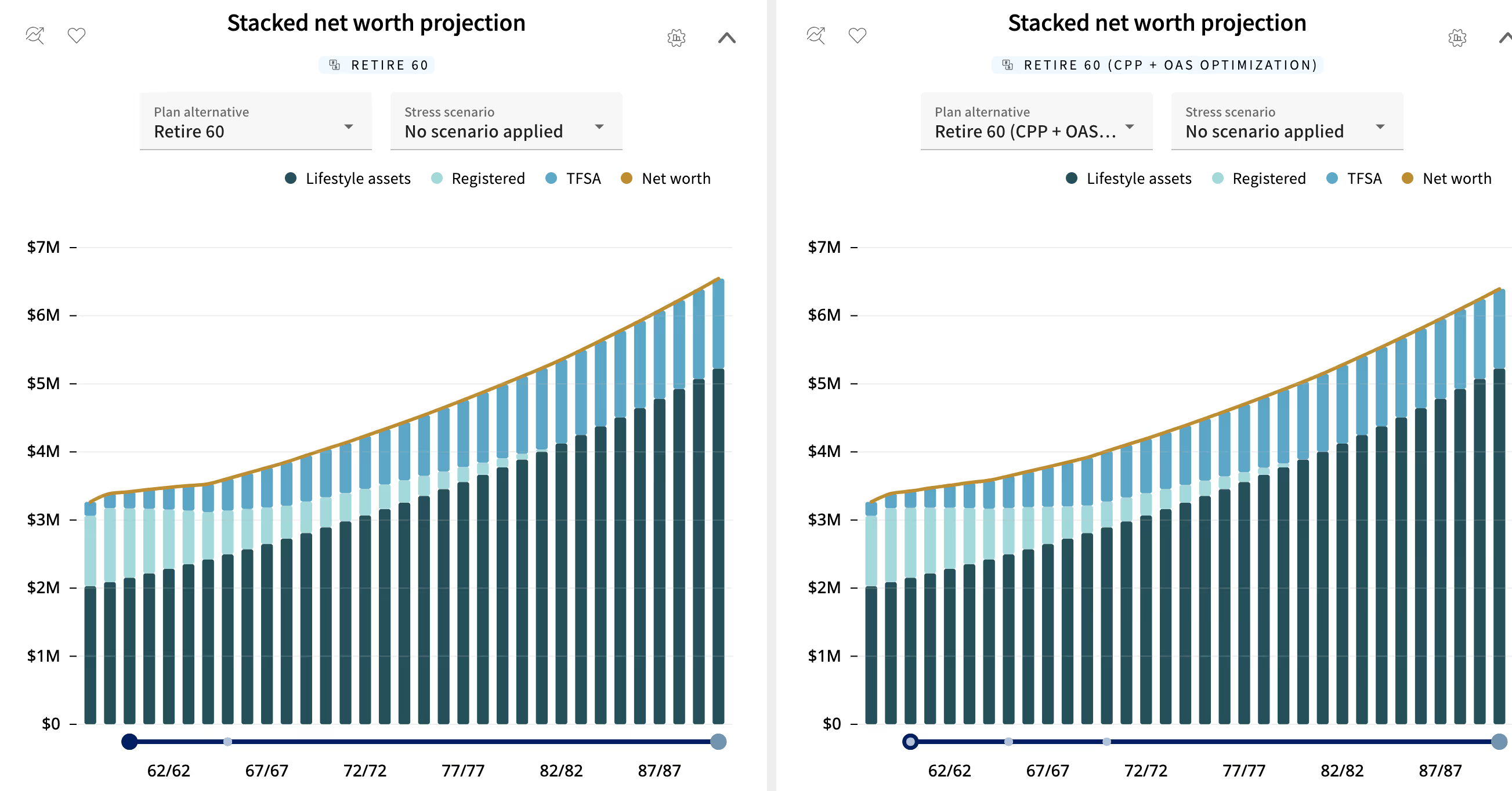
The Dual Pension Approach: Early CPP vs. Delayed OAS
Jake Starts CPP at Age 60: Because there is a maximum survivor pension limit if one spouse passes away early (2026 maximum monthly combined cap is $1,507.65), taking Jake’s CPP early locks in early cash flow, lowers survivor pension loss risks, and preserves investment capital.
Donna Delays OAS to Age 70: Donna defers her OAS to age 70, unlocking a permanent 36% lifetime increase in guaranteed inflation-indexed income while utilizing her lower RRSP income years from age 60–70 to execute tax-efficient withdrawals.
Summary: Why Independent Fee-Only Financial Advice Matters
By stepping away from generic bank advice and working with a fee-only financial planner in Toronto, Jake and Donna gained complete clarity. They confirmed that retiring at age 60 is fully achievable, protected their multi-million dollar estate from probate, built a strategy to support their children, and minimized their ongoing Ontario tax burden.
Frequently Asked Questions
Can I retire at age 60 in Toronto with $1.2 million?
Yes, it is possible, but it depends heavily on your withdrawal sequencing, tax strategy, and housing situation. In Toronto's higher-cost environment, a $1.2M portfolio (combined with deferred CPP and OAS benefits) can support a comfortable retirement income of $6,000 to $8,000 per month. Success requires active RRSP drawdown strategies between ages 60 and 70 to fill lower Ontario tax brackets before RRIF minimum withdrawals kick in at age 72.
How does a fee-only financial planner in Toronto charge?
Fee-only financial planners charge flat-fee, hourly, or fixed project-based fees directly to the client. Unlike traditional bank advisors or brokerages, fee-only planners do not sell investment products, collect mutual fund commissions, or earn Third-Party trailing fees (AUM-based Kickbacks). This structure ensures 100% unbiased advice focused solely on tax minimization, income drawdown, and estate protection.
There are two fees structures available at Ontario Wealth Strategy Experts. Click on Fees icon to learn more.How do I avoid Ontario probate fees on my principal residence?
In Ontario, you can avoid Estate Administration Tax (probate) on your primary residence by utilizing the First Dealings Exemption. If your property qualifies under the Land Titles system, your estate lawyer can draft a Dual Will (Secondary Will) structure. This allows your principal residence to pass directly to your beneficiaries without going through probate, saving approximately $15 per $1,000 of property value (around $15,000 for every $1M in property value).